Thursday, April 19, 2012

"It's Lance Bass!"

Before the seventh Harry Potter book came out, millions of people around the world placed bets on what would happen. Would Voldemort die? Would Ron and Hermione end up together? And whose side was Snape on, anyway? People wanted to know how the book turned out, but, of course, they did not want to be told. They wanted to read the book to find out for themselves.

I thought that Harry should have died. I thought it was a cop-out to for him to come back to life. He was the final horcrux! He should have been destroyed like all the other horcruxes!!

Note that I said "should." Harry should die. I did not say that I want Harry to die. In other words, the plot would have been better if Harry had died, but I did not want the "actual" character of Harry to die.

I am not alone in this desire to maintain the life of the famous Harry Potter. When JK Rowling was writing the seventh book she got letters from people begging for her to spare the lives of the main characters. Spare their lives! As if she were holding them hostage and determining (whilst stroking a cat and holding her pinky to her mouth) whether or not a good story was worth the loss of human life

I recognize that my attachments to Harry, Ron, and Hermione are irrational. The characters are not real people and I should not care whether they live or die. But when I'm reading the story they might as well be real. I'm attached to them as if they were real people.

So what happens if a story doesn't turn out the way that we want it to? Lots of people think Harry should have died. Others think Harry and Hermione should have ended up together. Still others think that Fred and George should have had a threesome with Lance Bass


That is the beauty of the human imagination. We have the ability to take the (fictional) characters created by an author that we do not know, and imagine the characters in situations that we have never seen them in.

Much of the pleasure that I get from books is in thinking about the characters as real people. I have a huge crush on Will Parry from The Subtle Knife, and when I was about to turn eleven, I checked the mailbox daily for a letter from Hogwarts. When I didn't get one, I convinced myself that I would get it on my twelfth birthday because the British system was a year ahead. True story.

Perhaps I am a bit of an extreme case, but many people have this sort of emotional attachment to the characters in their favorite books. I would go so far as to say that much of the pleasure people get from pop fiction comes from bringing the characters into their own lives.

That is where fanfiction comes in. If a story doesn't end the way that you want it to, fanfiction lets you change it! If you wish that Harry had died, or that Bella and Edward had more sex, or that you were a student at Hogwarts, you can write it!

When I was about 14 years old I saw the movie Flight Plan:


I thought the first half of the movie was decent but once I figured out what was going on I got bored and spent the rest of the time figuring out how the movie should have ended. When I got home I rewrote the movie. It's still on my hard drive if anyone cares to see it. I reread it last semester and I actually didn't hate it. I was shocked. But I digress....

It takes a special type of book or movie to elicit an outpouring of fanfiction. I am probably the only person in the world who has written Flight Plan fanfiction, but lots of people have written Twilight fanfiction. And this makes sense. Writing a fanfiction requires placing oneself inside of the characters that one is writing about. That is only possible for characters that feel so real that they develop their own wills and desires and thus can actually interact almost independently with new environments. This means that fanfiction tends to reveal an attachment that readers have to the characters of a book and a distance from the plot.

Some people think that Twilight has a terrible plot. I was talking to someone (I can't remember who, but if you are reading this, thank you!) who said that Twilight was frustrating because there was no tension. The moment there is tension (Edward Cullen hates Bella) it is resolved almost instantly (he is really in love with her and can't control himself around her).

Fifty Shades Of Grey is Twilight fanfiction, but it does not follow the normal pattern. Normally, fanfiction takes characters from a well-loved book or movie and puts them in strange situations. In other words, they keep the characters, ditch the plot. But Fifty Shades Of Grey follows a different pattern in that it keeps the plot and ditches the characters. Anastasia and Christian are very different from Bella and Edward, the most noticeable difference being that Christian is not a vampire. However, the rest of the plot is almost identical. One of my friends read Fifty Shades Of Grey not realizing it was Twilight fanfiction and noticed a near bijection between the main plot events of each. Needless to say, she was surprised (and probably a bit relieved) when she realized it was written as Twilight fanfiction.

But the point of this is that the plot of Twilight is so popular that it was published twice! And if we think about Twilight as having a generic romance plot, then that plot has been published thousands of times under the Harlequin label.

We may think that the stock romance plot is trite and uninteresting, but the romance plot is not a new idea. Jane Austen wrote romances that we consider "real" literature, but we do not consider Harlequin romances "real" even though they have very similar structures. In both cases, a male and a female who are dissimilar in some way shouldn't be together. But, of course, they end up together, proving that, in books at least, love conquers all.

So the plot of Twilight really isn't that trite and dull. In fact, it is so not dull that we have read it and similar plots hundreds of times without being bored. And my guess is that we will continue to read books like this, and watch romantic comedies, and narrate our own love lives as though they were novels, and continue to feel pleasure from all of this, until we learn how to reproduce asexually. 

Monday, April 16, 2012

Spoiler alert!


There is a game that I sometimes play with my friends that I just now dubbed The Plot Game (I'm super creative, I know). The idea is that you take a famous book/movie and you tell the story without any specifics. You strip away names, character, style, etc. Basically, everything but the plot. The goal of the game is to be the first to guess the book/movie by just the plot outline. Let's play!

There’s a girl who is in first grade or so, who is brilliant, but her parents and her brother are awful. The girl goes to school and has an amazing teacher and the teacher realizes that the girl is brilliant and tries to get her to realize her full potential, while avoiding the evil principal who ends up being the teacher’s aunt. The girl sort of has super ESP-like powers because she is so smart that her brain can’t contain her intelligence. She uses her magic to overpower the principal and lead a children’s rebellion. Then she gets adopted by the teacher. 

Do you know what book I'm talking about? Scroll down to see the answer...


For those of you who guessed Matilda:


You're right! Congratulations!

This game is fun for a few reasons. The first is that it’s a competition, and competition is always fun. The second, and more relevant reason, is that it interesting to see how different a book/movie is when it’s stripped of everything but the basic plot outline. This summary of Matilda carries with it none of the magic from the original book to the point where it is almost unrecognizable as the book. This is really interesting because it shows how important the sentences are when we read a book. If instead of my plot summary above, I simply said to you "Everyone is born, but not everyone is born the same," (which is the first sentence of the book) you would get a much better sense of what the book Matilda is going to be like than if I just gave you the plot summary, which describes instead what it will be about.

But that doesn't mean that a plot itself cannot be quite good in isolation. Many Shakespeare plots are so well-loved that they have been done and redone as movies:


and even SNL skitsFairy tales, legends, myths, and fables are other genres whose plots have been done and redone: 


This shows that there is some inherent pleasure in the simple plot of a book, without the burden of prose and character development.

This is apparent when we think of things that entertain us that strip away everything but plot. For example, if you miss an episode of How I Met Your Mother, you may get a friend to fill you in (this was, of course, before the internet made it easy to catch up). The friend can say something like “Robin and Ted had sex” and you will get some pleasure from knowing that plot aspect without knowing anything about the process that got them there.

Plot is often enhanced by other aspects of a story like style and characterization, but plot is the foundation on which most writers write. When I write a story I start out with a plot outline. I do not start out by thinking, "Hmm I want to create a mood that embodies the scent of lavender..."but instead, "Okay, we're in the future and there are these robot vending machines, and the robots are basically hookers..."

Think about shows like Law And Order:


or The Twilight Zone:


These TV shows are almost entirely plot. We get new characters in almost every episode and we really only care about the things that happen to them, and not so much the way that they are happening.

And when we tell a story that happened in our own life, we are just giving the core details of the plot. “You’ll never guess what happened to me the other day! I got pulled over by a cop for speeding yesterday and I sort of recognized him, so I looked at his badge and I recognized his name. So I asked ‘Are you Spencer Jones from Vassar’ and he said ‘Yes’ and then I realized who I was. Turns out, we had dated back in college! Needless to say I got out of the ticket.”

Okay, so this story was entirely made up, but we all tell stories like this: fast-paced, shallow, plot summaries. And what is more is that we are entertained by them. We like telling them and we like hearing them. We have no idea who Spencer Jones is and we don’t care because his only purpose is to further the plot of this little story.

Twilight has a plot. One might even say that it has an engaging plot. A girl goes to a new school where she is worried she doesn’t really fit in and she falls in love with a man who turns out to be a vampire. This is like 100 times better than the Spencer Jones story!

Almost all of the complaints about Twilight are about the weak writing style or the flat characters, but no one ever praises the plot. Turns out, the plot is pretty awesome! We have to give Stephenie Meyer some credit here. 

Sometimes it is hard to remember, but there was a time when nobody knew that Edward Cullen was a vampire. If you were to read this book before it made the big screen, you would be wondering along with Bella just what was up with Edward! And then once you realized it, you wouldn't be yawning like I was when I first read the book, you would be shocked! There is something to be said for reading a book for the first time and not knowing what is going to happen. The element of surprise can provide us with tremendous amounts of pleasure, and it is hard to feel that initial shock when a book is as well-known as Twilight is.

I'm currently reading Fifty Shades Of Grey which is a Twilight fan fiction-turned-novel. If you are planning on reading it, do not read this post any further, as there will be SPOILERS!

Fifty Shades Of Grey is essentially a retelling of Twilight with an older and less wooden female lead and a whole lot more sex. The important thing here is that it is a retelling of Twilight

I did not know coming into this book exactly what its backstory was. I did not realize that the story was supposed to mirror that of Twilight and for the first fifty or so pages (before I figured out that it was Twilight) I was genuinely engaged in trying to figure out what Christian Grey was. There is something very exciting about not knowing something, but knowing that if you keep reading you are going to find out.

We cannot write off the plot when we read Twilight, although it is very easy to, as we knew it going into the book. Stephenie Meyers was not given a Shakespeare plot or a Greek myth and told to write it in her own way, she completely made it up! And it is hard for us to remember that because for most of us, when we read it, the plot was a given. We knew what the plot was so we were just reading it see how Meyers handled it. But that is not how the book was meant to be read. The book was meant to be read with a set of fresh eyes, and it is unfortunate that we all heard the The Plot Game summary before we read the book. 

Spoilers are called spoilers for a reason.

Thursday, April 12, 2012

Ain't Nothing But Mammals


Before I got lost in tangent-ville, talking about YA, cannibalism, and embarrassment, I was talking about the vicarious pleasure that a person can get from reading Twilight. I want to return to that briefly today to wrap it up before I move on to my next big topic.

In my last post I compared the pleasure we get from a Big Mac to the pleasure we get from filet mignon.We know that Big Macs are bad for us. We know they are cheaply made, mass-produced, and lower-quality than filet mignon. But when we put a Big Mac in our mouth, we cannot deny that it provides us pleasure.

We have an elitism about what types of pleasure "count." Roland Barthes wrote an entire book trying to pin down the essence of this elusive idea of what is "real" pleasure. However, Barthes is only really thinking about the pleasure of high-brow things: going to the opera, reading James Joyce, listening to a symphony. These are the filet mignons of pleasure. But Big Macs also provide us pleasure, often extreme, addictive pleasure, and yet we do not think of these types of pleasures as "real."But why do we have this elitism?

Because we're humans! We're better than the neanderthals that derived extreme pleasure from fat and sugar. We are evolved enough to ignore the cheap pleasures of the Big Mac, and sometimes even convince ourselves that we don't derive pleasure from it at all.

But let’s face it, we are still animals. We evolved from apes and we often act like them. Why do we like the Big Mac? Because it tastes good. And it tastes good because we need the sugar, fat, and protein to survive. Yes, the quantities of sugar, fat, and protein in a Big Mac are excessive, but our animal instincts don’t recognize that. Of course now our cultured sensibilities tell us “Don’t! A moment on the lips a lifetime on the hips!” But we all do it. We all eat ice cream and hamburgers and fried chicken and whatever else. If we were as cultured and evolved as we like to think we are, we would only eat filet mignon and grilled chicken breast on a beds of lettuce.

But cheap, greasy food is not the only thing that satisfies our animal cravings. We watch Jersey Shore and Days Of Our Lives, we listen to Lady Gaga and Nicki Minaj. And then there’s sex. Sex is about as animal as it gets. There is no high-class equivalent to sex, and sex gives people tremendous pleasure. In fact, sex is probably the thing that brings the most pleasure to the most people, yet we don't discount that pleasure due to its animal nature. Quite the opposite, in fact.

So why is it that Twilight is not thought to provide "real" pleasure. Why do we hang our heads in shame at having enjoyed it? Why do we chastise its YA status, and mock the cannibalistic intentions of Edward Cullen? Why do we think that Ulysses provides “real” pleasure but Twilight is pulp at best?

I don't believe that it is pulp. Or rather, I believe that its pulp status does not discount the pleasure we get from reading it. The vicarious pleasure we derive from Twlight is as real as it gets, in the same vein as the very real, animalistic pleasure we get from sex.

Humans are social creatures. We require various types of communities to facilitate our happiness: the family unit, friend circles, etc. A normal human is unhappy when he or she is alone for too long. 

What is more is that a person is only considered normal if he or she is able to interact with other people. We think there is something wrong with us if we can't make friends. Many mental disorders include the inability to relate to people, for example, a sociopath is a type of person that cannot feel basic empathetic emotions like guilt or compassion or love. Sociopaths are not the norm, and very often they are unsuccessful socially. 

Classifying as a normal, social human being requires the ability to relate to other people on an emotional level. So, evolutionarily speaking, it makes sense that humans derive pleasure from sharing someone’s emotions. We feel extreme happiness when our sports team wins a game, we feel sick or cringe when someone else bleeds, our mouths drool when we watch other people eat, and we feel horny when we read about people having sex.

And what is this but vicariousness!

What is more is that in order to enjoy this vicariousness, you have to consider yourself similar to the person that you are empathizing with. According to this study and this study, it is important to relate to the person in order to feel his or her emotions. This makes sense evolutionarily, again, because you want your family to survive, even if that has to happen at the expense of another family. You empathize with the people you relate to and do not empathize with the people you cannot relate to.

And this gives us extreme, very real pleasure. According to Paul Bloom’s How Pleasure Works, humans spend more time daydreaming or imagining than doing any other activity. They are not actually having sex or eating or hanging out with friends, they are only watching it happen on television or thinking about it happening while sitting in the middle of biology class. If imagining weren’t a real pleasure, why would we spend so much time doing it?

Perhaps Ulysses is higher-brow than Twilight. Perhaps we feel more evolved when we read it. But Twilight caters to primitive, animalistic pleasures like our sense of vicariousness and our desire to imagine. Maybe we feel less evolved when we feel this animalistic pleasure, but that does not make the pleasure any less real.

Monday, April 9, 2012

In Defense Of YA


The other day one of my professors referred to the young adult (YA) genre as “juvenile fiction.” This term bothered me when she used it, and I told her that. But when I tried to defend why it bothered me I landed on the fact that the word “juvenile” often is equated with the word “immature.” YA fiction, at least the good stuff, is anything but immature.

This week, the class for which I am writing this blog (Please, Please Me, in the AMCV department) assigned the book Nothing by Janne Teller:


For those of you who have not read it, here is a review with a well-done summary. But, for the sake of those of you who are like me and choose to read books without knowing anything about them, I will spare you the summary and will simply link to the review for those of you who are curious.

Nothing is a book that no one would categorize as “juvenile.” The sentences are simple and the characters are children, but it is hardly immature. In fact, it is probably the deepest, most thought-provoking book that I have read in the last few years. I highly recommend that people read it. It is beautiful.

So why is this book categorized as YA? It deals with sophisticated, adult topics, its characters have depth, and the story is immensely powerful. I don’t cry often when I read, but this book struck me so deeply that I not only cried when I read it alone in my room, but I welled a bit when certain sentences were read in isolation during class. What is juvenile about that?

When we are young we believe in Santa Claus, the Easter Bunny, the Tooth Fairy. As we grow up we become jaded. We stop believing in magic, and it becomes harder for us to be moved by things. Forget magic, think about how many people stop believing in things like love or happiness as they grow up.

As a concrete example, think of a movie or TV show or even a commercial that scared you when you were a child. I used to watch the show Are You Afraid Of The Dark when I was young and I remember having trouble sleeping after watching this episode:


After watching it again, I cannot regain the fear I once had while watching it. Maybe I became jaded, but I think I just grew up.

Children have a hard time distinguishing reality from fiction, and often authors can take advantage of this fact when writing for a younger audience. Yes, I know that wizards and vampires and zombies don’t exist, but when I read a book I can pretend that they do. Books allow me to suspend my disbelief and appreciate the story as though it were real.

Many adults have a hard time with this suspension of disbelief. I am the only one in my family who enjoyed Harry Potter because my parents and sister couldn’t get over the fact that it couldn’t happen. The word that they kept using was “stupid,” which is not very descriptive, but it gets the point across. What they mean is that the book doesn’t make sense to them. The events within it cannot happen so they have trouble pretending it could happen enough to enjoy themselves.

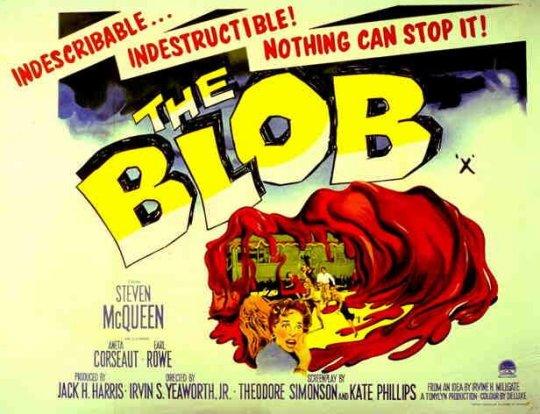
Think about the movie The Blob:


Watching that movie in the 21st century is often comedic, not scary. But watching it when it first came out in 1958 was, I’m sure, a terrifying experience. We have gotten good at watching movies so that we have higher standards for what looks real and what doesn’t. In the case of The Blob we have trouble getting wrapped up in the terror that people in the 50’s felt because we are too distracted by the inaccurate graphics to suspend our disbelief.

Because YA writers are writing for children, the authors have the liberty to be more extreme in characters, plot, and setting because children will believe it (at least for a short time) and adults will not. With books like Harry Potter and Matilda the extremities are obvious because they include magic. But even when we look at YA books like Stargirl  and Maniac Magee and Holes, where the magic is less obvious if it exists at all, we see extremes of characters that we would never see in adult literature.

Whether you like this sort of book is a matter of taste. When I eat food I like extremities. I like extra-hot buffalo wings, I pour salt on everything, and I add chocolate to my oatmeal. The same goes with fiction. I like to feel something when I read and often that requires the literary equivalent of hot sauce, salt, or chocolate.

Twilight operates under these extremes of plot and character. Edward is a vampire, Jacob is a werewolf, and the love story is exaggerated and fantastical. But for salt-lovers like me, this is what gives the book its power. If you can suspend disbelief enough to immerse yourself in a world where this is plausible then you can give yourself over to the pleasure and enchantment of the book.

I know I truly loved a book when I leave the world wishing that I could live there, or at least that my world were as exciting as the one in which the book takes place. In many cases this is where the pleasure lies. The ability to suspend disbelief and live in a magical world is one of the things we remember the most fondly about our childhoods. When we read YA literature we can live in a magical world for a short period of time. Perhaps there is nostalgia involved in this type of pleasure, or perhaps it is just the raw pleasure of being somewhere entirely different from your own world. But it is pleasure.

I would not say that I loved Twilight, but that may be because I had trouble suspending my disbelief while reading it. I was too aware of its existence as a book. I was watching the page numbers increase, and I was checking for consistency between chapters in the story. But I think that was my problem, not the book’s. I went into the experience expecting something and that kept me distanced from the text, preventing me from allowing myself to be immersed in the world. But for someone who is lucky enough to be able to lose track of time while reading Twilight, good for them! I’m jealous!

We know that eating a greasy, salty burger is pleasurable, but we also know that filet mignon is better than a Big Mac. So some may argue that using these extremities of plot and character cheapens the pleasure you get from reading it.

But a good YA novel doesn’t have to be McDonald's. It can have just enough salt to make the other flavors dance. I’m not sure if Twilight actually accomplishes this, but the best YA novels absolutely do. The pleasure of a YA novel lies in the world being extreme enough to generate a strong emotional response and a certain enchantment for the reader. As long as a reader is able to suspend disbelief enough to trust the world in which the story lies, then the reader will have an intensely pleasurable experience.

Thursday, April 5, 2012

F*&$in' Cannibals...


This will probably be a relatively short post because I have had a very busy week and I am planning a much longer, research-y post which is not quite ready yet but has been sucking up large quantities of my time.

So today I want to talk about cannibalism.

In doing research for the aforementioned post, I began reading the book “How Pleasure Works” by Paul Bloom. First of all the book is amazing. It reads like Freakonomics so I feel like a genius because I can read it quickly, but it’s also insanely interesting so I feel like an expert now that I’ve read half of it.

The book is all about why we like certain things and other things gross us out. For example, the idea of sex with an immediate family member (mother, father, brother, sister) strikes almost all humans as repulsive and morally reprehensible, regardless of culture. However, many people find eating certain animals (or animals in general) repulsive, but I eat animals all the time without thinking about it.

The book talks a lot about the idea of essentialism. Essentialism is the idea that people, places, and things have an essence: something that makes a thing unique, regardless of outer appearance. Many studies discussed in this book used the idea of “duplicates” or a “duplicating machine” to study how people (often children, as they are the ones that would trust a duplicating machine) react to objects and sometimes living things being swapped for exact duplicates.

The results of the studies are pretty conclusive. Even as young children we realize the value of an original. Even if the original is something small and stupid, like a piece of paper, it is the original. It is ours. And a duplicate is nothing better than a fake. 

For example, if one day you found out that everyone you knew had been switched out for an exact clone, you would probably panic. Even if those people looked, acted, sounded, smelled exactly like the original, it just wouldn’t be the same. There is something important about the inside of our loved ones that is crucial to them and that cannot be duplicated.

The opposite holds true as well. If somebody decides to get plastic surgery and completely change the way they look, they are still the same person. If you loved them before you probably would love them even with the physical modifications (unless it went horribly wrong, I suppose).

And this doesn’t just go for people, this goes for objects as well. An authentic Vermeer painting is worth a lot more than a really good forgery. Many parents will keep a lock of hair from their child’s first haircut. That lock of hair is worth nothing except for the intrinsic, sentimental value of it, so if someone were to swap it out it would be meaningless. The same goes for a child’s security blanket or teddy bear. Often these objects are just cheap toys, yet to the child the object is priceless.

It is this essentialism that causes many people to become vegetarians. Animals have an essence, or a soul perhaps, and so it is as terrible to eat an animal as it would be to eat a human.

But is it really all that terrible to eat a human? 

Well, in many cultures it is not. In some cultures, primarily historical, being eaten after your death is an honor. Dead elders are often eaten so that their essence gets incorporated into the essence of the eater.

You may be thinking that cannibalism like this doesn’t exist in modern society, and you would be right for the most part. But “How Pleasure Works” gives a few very interesting examples of modern day cannibalism.

The eating of the placenta after a birth is something that happens relatively often. The eating of the placenta is thought to help with postpartem depression, the idea being that the baby’s essence is getting reincorporated into the mother’s body. Another example: Keith Richards once snorted his father’s ashes. And then, of course, there is the Eucharist, in which, depending on your religion, you are either metaphorically or literally eating and drinking the body and blood of Christ.

In other words, you are what you eat.

So in some ways, wanting to eat someone is incredibly romantic (if we can get past the creepy bit). You can love someone so much that you want part of them to become part of you.

Perhaps we don’t actually want to eat our significant others, but we can imagine more traditional examples that involve less…well…death.

When women have children, part of the man they (presumably) love is living inside of them. Sex itself is in some ways a form of possession involving either penetration into another person or allowing another person inside of you, depending on your role in the act. Even kissing is a form of this consumption, as it involves an exchange of bodily fluids.

My favorite example given in the book (page 20), involves the overheard phone conversation in which Prince Charles expresses his desire to be reincarnated as his mistress’s tampon, allowing him to literally live in her vagina, soaked in her blood.

Perhaps this last one is taking it too far. I guess now would be the appropriate time to pull it back to Twilight

The idea of the vampiric lust that Edward feels towards Bella has often been thought of as creepy. And, yes, it sort of is. But it is also weirdly romantic.

For starters, Bella’s blood smells better than anyone else’s to Edward. Blood is something deep and intrinsic about a person, so in many ways, Bella's awesome-smelling blood is her essence. If Bella were to be swapped with an exact duplicate, her blood would be different and Edward would probably not love it as much.

Edward has the same romantic desire to consume Bella that many people have towards the people that they love. Maybe the majority of us don’t want to actually eat our loved ones (at least, I hope not…) but we do want to possess the qualities about them that we love. We also want to know them in a way that we never truly can:


In some ways, this desire is the same as the desire to consume someone's essence.

So maybe Edward’s desire to eat Bella isn’t all that creepy and disgusting after all. Perhaps it is no different from our non-vampire desires for intimacy.

(Note: Most of the information presented here comes from Paul Bloom’s book “How Pleasure Works.” If you want to read any more about cannibalism or just want to hear gross things that people sell on Craig’s List (seriously, read it for just that alone) you should read this book. I’ll even loan it to you.)

Monday, April 2, 2012

Stop Judging Me! I Can Feel You Judging Me Through The Internet!


I really should stop saying when I will post about what, because I almost never do what I promise. I will come back to the vicariousness of the fantasy eventually because I have at least one more point I need to make about it. And I will talk about plot at some point, also, because, well, Twilight has one. But something happened recently that got me thinking about the public-ness of reading. Not public-ness in the way that books spark discussions, but public-ness in the way that books are physical objects that exist in a public environment.

You see someone reading Godel, Escher, Bach on the train and you think something about them. You see them reading The Girl With The Dragon Tattoo and you think something else. You see them reading a book that you don't recognize and you think a third thing. 

These thoughts will be different depending on the person’s dress or whether you liked the book or whether they’re reading it before or after the movie came out. But no matter what, you think something.

I have two very cluttered bookshelves: one at school and one at home. The bookshelf that I have at school is what I want to talk about because it is filled with the books that I chose to display in my room. They are, in a way, as decorative and representative of me as my pile of stuffed animals or rack of earrings.

Some of the books, like Harry Potter, The Golden Compass, and Matilda are books that I have read over and over to the point of memorization. They are books that I couldn’t bear to part with when I went to college because at some point I knew I would need the comfortable pleasure that I always get from them.

Other books are ones that I plan on reading such as The Name Of The Wind and Game Of Thrones (I know, I know! I’ll get to them eventually!)

But many of the books I only brought with me because I wanted to be perceived as the type of person who reads that type of book. For example, I brought 1984 with me even though I hated it when I first read it. I told myself I would reread it in college and like it better than I did before, and I turned out to be right. But when I’m truly honest with myself, I know I brought it to school with me because I wanted to be seen liking 1984.

A few days ago I was at my sister’s stand-up comedy competition and one of the comics asked the audience, “Who here is a fan of Twilight?” My mom was sitting next to me and nudged me with her elbow, but I did not raise my hand.

I managed to justify my abstinence by thinking, “Well, I’m not exactly a fan. If he had said who enjoyed Twilight or who derived pleasure from Twilight then I would have said something. But am I a fan? Not so much.”

But I know that I was just rationalizing. I didn’t raise my hand because I was embarrassed. I was in a room full of strangers, people whose names I didn’t know and would probably never see again, and yet I felt the need to protect myself from judgment. “Of course I’m not a fan of Twilight,” my actions said. “What am I, twelve?”

And this embarrassment has manifested itself in other ways, too. A few weeks ago I was searching for a book to read as I worked out in The Bear’s Lair and I found myself reluctant to bring my copy of Twilight. What if someone saw me?

I realized that I was being silly, so I brought the book with me anyway. But on the way over I caught myself hugging the cover to my chest and positioning my arm in such a way that passers-by could not guess what book I was reading.

I’m not the only one who feels this embarrassment. Whenever I talk about this blog to my friends, people tend to (sheepishly) react with a “Yeah, I guess I did enjoy reading Twilight,” but it is always qualified with a hasty, “It wasn’t good though!”

So why the embarrassment? Are we ultra-hipsters who hate everything that is popular? Are we “educated adults” who genuinely hate the shallow pleasure of pop fiction? Or do we just hate it because everyone else hated it? Do we even hate it? I didn’t hate it, although I am sure I have said the sentence “I hate Twilight” on multiple occasions, both before and after I read it.

Upon hearing about my blog, one of my friends drew this graph on our white board:


While the specific locations of these books debatable, the general idea is sound. There is a distinct difference, and often a trade-off, between the enjoyment you get out of a book and your appreciation of it. Often this appreciation is conflated with how good a book is or, for me, how much I want to be seen enjoying it.

This does not just apply to books. For example, I appreciate the song Density 21.5


but I spent all day today listening to Uptown Girl.


And then there's my (shameful, shameful) Glee obsession...


But the point is, when we're dealing with the idea of pleasure, we cannot deny the extreme pleasure we get from pop fiction, pop music, pop movies, pop corn, pop tarts, pop rocks. If we do, and we pretend that pleasure has a capital-P and means something elusive and, if you read Barthes, French, then we are losing the actual, English meaning of the word pleasure

Pleasure means enjoyment, at least according to the OED. And it doesn't matter whether that is enjoyment is one that you are proud of and put on your college bookshelf and raise your hand for in the audience of a stand-up comedy show, or an enjoyment that you hide under your pillow or bury inside of a copy of Moby Dick or pretend is your sister's when your friends find it. Enjoyment is enjoyment, and enjoyment is Pleasure. So enjoy!

Friday, March 30, 2012

No, Seriously, Why Do Men Like Twilight?


Today was going to be erotica statistics day. But as I was reading through "Best Women's Erotica 2011" and collecting the statistics I became incredibly bored by most of the data I was collecting. And if I'm bored then I will write like I'm bored, and the product will be as boring to read as it was to write. So I won't waste my time with the boring stuff and instead I will write about only the data that interested me and how that interesting stuff relates to Twilight.

One of the most interesting patterns I saw was how often the pronoun "I" is used as the voice of the narrator. 15 out of 19 stories in this book are written in the first-person. I didn't think much of this until I was reading the entire book straight through and came across one that wasn't written in first-person. And that story stuck out because it read more like a story with sex in it and less like erotica.

When reading a book, I have often wondered exactly what goes on in my head. I'm not exactly reading the words "out loud" in my head, because once I start to think about it as reading "out loud" in my head I can feel myself reading differently. But even so, there is definitely some sort of voice in my head as I'm reading. So when reading a novel that takes place in the first-person, it is almost as though the strange voice in my head is talking about itself.

This "I" voice makes sense in the context of erotica. The nature of erotica is to throw oneself into the story as fully as possible. So when reading erotica in one's head, the style of the writing forces the reader to imagine that its happening to him or her simply because the "voice" in your head says that it is.

Twilight is written in the first-person. This was something that I had never really noticed until my attention was drawn to it. But because of this first-person narrator, the voice in your head reads the story about "I" in the same way that it reads erotica about "I." This "I" voice in your head forces the reader to imagine that the "I" in the story is referring to that reader.

I have mentioned the importance of names (or lack thereof) in erotica, and only 9 out of 19 give the "I" character a name, and out of those 9, only 4 of them say the name more than once or twice at the beginning of the story, and out of the 5 that are left, only 1 of them is written in the first-person "I" voice.

I found this really interesting. This means that in all but one of the stories written in the first-person, we get hardly any name at all. The data on description of the "I" character is very similar. When we are in the perspective of "I" we get a description of hair often, or skin color, possibly height, usually breast size, but that is it. As far as we know, the main character, the "I", is a colored mannequin with a wig on. When we're given this generic and nameless "I", the "I" really might as well be us.

But when reading Twilight we do get a name, so it is not exactly the same thing. If we are in this character of Bella, and we are reading this book to ourselves and our inner voice is telling us that the "I" is us, shouldn't we be shocked when we get a name? "My name is not Bella, it's Aimee!"

I thought about this for a while and the conclusion I came to is that the name is generic, feminine, and literally means "beautiful." That's something that anyone can be called. The name "Love" is used a lot in "Best Women's Erotica 2011" (granted, the writers are primarily British). But often "honey" or "dear" or even "beautiful" is used as a pet name. In a way, these generic feminine names, like Cassie and Adele and Miranda and Bella are just pet names that serve to remind the reader of her femininity.

So then why do men read Twilight? If it is about a teenage girl and serves as an enactment of the teenage girl's fantasy, then why do men like it?

Well, I think the answer is that many of them don't, and perhaps that's why they don't. But there are some men that do. The blog I linked to last week says that if you are a man that likes Twilight then you are gay. As in, literally a homosexual. But I don't agree with that.

I posed a question in one of my earlier posts about whether people read erotica that mirrors their own sexual preferences. And I think that in general they do. But I also think you can get pleasure out of erotica that swings a different way than you do. And the reason for this is because of another interesting trend I found in the erotica stories.

In many of these stories there is a theme of moving away from the norm, of becoming something that you're not. In one story, "Opportunity" by Cynthia Hamilton a lesbian girl named Lin is given her first sexual encounter with a man by her girlfriend Celia as a gift. She is blindfolded the whole time and never sees his face or even knows his identity, and in the end she determines that it is Celia that she wants forever, even though a man was fun as a one-time thing.

In another story, "Skinheads" by Jacqueline Applebee, a woman without a name wears a strap-on to have sex with a man to live out a childhood dominatrix fantasy.

In a third, "Tricks" by Lola Olson, a girl puts on a skimpy outfit and pretends to be a prostitute who picks up a cop.

I could continue, but I won't because in 16 out of 19 of these stories I found a sentence or a paragraph or an entire plot arc that centers around doing something once or becoming someone else.

And this plays into the idea of the fantasy. A fantasy isn't something that happens to you every day, it is something that you would like to happen or something that you imagine happening. Perhaps something that you want but are embarrassed about wanting. In the example of the fantasy from The Marriage Plot that I wrote about in my first post about fantasies, Madeleine didn't necessarily want Leonard to spank her, but it was something she fantasized about.

So perhaps men read Twilight as a fantasy in the same way that the girl in "Tricks" pretends to be a prostitute, or in the way that the woman from "Skinheads" wears a strap-on, or in the way that Lin has sex with a man. It's about curiosity. Perhaps men are curious what it feels like to be loved by a man. Not in a homosexual way, necessarily, just as a curiosity. It's the appeal of Madonna's What It Feels Like For A Girl, or The Parent Trap or Freaky Friday. It's about the curiosity that everyone feels wondering what it feels like to be someone else. And through reading Twilight, a man can get a glimpse of what it feels like to be a woman.

Another reason men may read Twilight is because they want to understand women. There is an old joke that goes something like this:

A man finds an old lamp and rubs it and a genie pops out of it. The genie says, "You get one wish," and the man says "I wish to be the richest man in the world!" Then the genie says "Are you crazy? That's way too big of a wish! If that happens then the world will grow suspicious and genies will be exposed and it's just not worth my job. Anything else though." And then the man says, "Well, I would like to understand women..." and the genie says, "All right you can be the richest man in the world."

So perhaps this is a reason that men like Twilight. Perhaps there is an element of getting inside the female brain, figuring out what they want and don't want, reading their innermost thoughts.

And the final reason that men could like Twilight is because of the story. The story is violent and weird and a little bit creepy, and hell there are vampires involved. Plot is something that can provide a huge amount of pleasure, separate from fantasy, separate from romance, and separate from erotica. Plot is such an important part of the pleasure in a story that it will probably be the next major topic that I tackle in my blog after I finish the idea of fantasy.

So why do men like Twilight? Well, maybe some are gay and like it in the same way that many women do. But some may like it because it satisfies some desire for information that everyone has. It lets them know what it feels like to be someone else. And in that way, maybe Twilight can be erotica for men just as easily as it can be erotica for women.